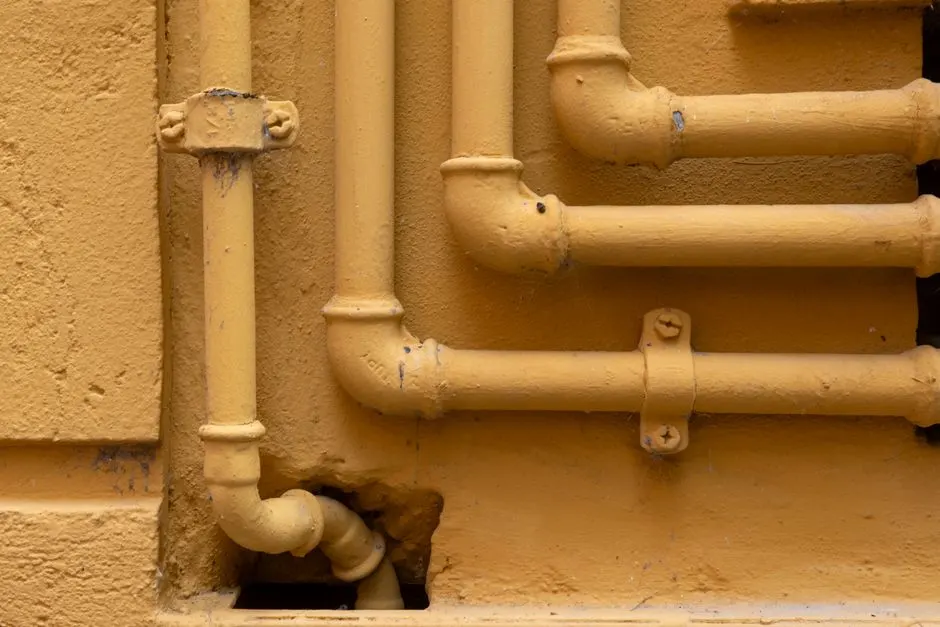
The most common leak problems in older Brea homes are galvanized steel supply pipes that have rusted from the inside out, copper pinhole leaks caused by 40-plus years of Brea's hard water, slab leaks from soil movement under 1960s and 1970s foundations, and failing shutoff valves at every fixture. If your Brea home was built before 1990, at least one of these is already present or developing.
We have crawled under hundreds of homes between Downtown Brea and the Olinda Village area, and the same nine failures show up again and again. Below is what each one looks like, what it costs to fix in 2026, and how to catch it before it damages your foundation or your flooring.
Why Older Brea Homes Leak More Than New Construction
Older Brea homes leak more than new construction because their plumbing was installed to a different standard, with materials that were never expected to last 50 years. The bulk of Brea's housing stock went up between 1955 and 1985, during the oil boom and the buildout around the Brea Mall. Those homes were plumbed with galvanized steel, which corrodes from the inside and eventually closes off or splits.
Common leak problems older Brea homes CA homeowners deal with today trace back to three things: pipe material, water chemistry, and soil. Galvanized steel has a service life of roughly 40 to 50 years. Copper installed in the 1970s is now hitting the age where pinhole leaks appear. And Brea's water, drawn largely from local groundwater and imported supplies, runs hard enough that scale builds up inside every pipe it touches.
Add 60 years of Southern California heat cycling, minor seismic movement, and root intrusion from mature trees, and you have a plumbing system that is being asked to do more than it was ever designed to handle. That is why we treat leak detection for older homes Brea CA as a different job than a leak call on a 2015 build.
What Are the Most Common Leak Problems in Older Brea CA Homes?
The most common leak problems in older Brea CA homes are corroded galvanized supply lines, copper pinhole leaks, slab leaks, failing toilet flanges, worn shutoff valves, water heater tank failures, irrigation line breaks, sewer line root intrusion, and roof flashing leaks around old vents. Here is what each one looks like in practice.
1. Galvanized steel supply pipe corrosion
If your home still has galvanized pipes, they are rusting from the inside. You will notice rusty brown water first thing in the morning, low pressure at the far fixtures, and eventually a pinhole that sprays inside a wall. We replace these runs with PEX or copper, usually one zone at a time to keep costs manageable.
2. Copper pinhole leaks
Copper from the 1960s and 1970s develops pinhole leaks where hard water has eaten through the pipe wall. A single pinhole can lose 10 to 30 gallons a day inside a wall before you see a stain on the drywall. We locate these with Acoustic Leak Detection Brea CA, which picks up the hiss of water escaping under pressure without opening the wall.
3. Slab leaks under the foundation
Slab leaks are the most expensive problem on this list, and they are common in Brea's 1960s and 1970s tracts. Warm spots on the floor, a water bill that jumped $80 to $200 in one cycle, and the sound of running water when nothing is on are the classic signs. We cover these in detail below.
4. Failing toilet flanges and wax rings
A toilet flange that has rusted through will leak every time the toilet is flushed, slowly rotting the subfloor around it. If your bathroom floor feels soft near the base of the toilet, stop using it and call us. This is a $250 to $600 repair if caught early and a $2,500-plus repair if the subfloor and joists are gone.
5. Worn shutoff valves
Every angle stop under every sink and toilet in a 1970s Brea home is past its design life. They seize open, then snap when you try to close them during an emergency. We replace them with quarter-turn ball valves for $35 to $75 each, and we do it before they fail, not after.
6. Water heater tank corrosion
A tank water heater lasts 8 to 12 years. If yours is older than that and you see rust streaks on the tank or a puddle in the pan, the tank is done. We handle Water Heater Leak Detection Brea CA and can tell you in one visit whether it is a fitting, the T&P valve, or the tank itself.
7. Irrigation and sprinkler line breaks
Older Brea yards have irrigation lines installed decades ago with poly pipe that has gone brittle. A single broken head can waste 20 gallons an hour and go unnoticed because it drains into the soil. If your water bill spikes in summer but nothing inside is leaking, this is usually why.
8. Sewer line root intrusion
Ficus, sycamore, and liquidambar roots find the joints in old clay and cast iron sewer lines and grow into them. You will notice slow drains across the whole house, gurgling toilets, and sewage smell in the yard. We run a camera and locate the break before anyone digs.
9. Roof and flashing leaks around old vents
Original roof penetrations from the 1960s and 1970s have flashing that has cracked and pulled away. These show up as ceiling stains after the first big rain of the season, usually in November or December. Left alone, they rot the roof deck and the top plate of the wall below.
Slab Leaks in Older Brea Homes: The Hidden Cost
Slab leaks in older Brea homes CA are the single most damaging leak type we see, because the water has nowhere to go but up through the slab or out into the soil under the foundation. A slab leak that runs for a month can move enough soil to crack interior walls and lift flooring.
We find slab leaks with a combination of acoustic listening equipment and Thermal Imaging Leak Detection Brea CA, which shows the temperature difference where hot water is escaping under the slab. That lets us mark the exact spot on the floor before anyone cuts concrete.
Typical 2026 pricing in Brea for slab leak detection runs $350 to $650. Repair depends on the method: rerouting the line through the attic runs $2,500 to $5,500, while spot repair through the slab runs $1,800 to $4,000 plus concrete and flooring. We give you both numbers before we start.
If your home was built before 1980 and you have not had the slab checked, it is worth doing. We handle Slab Leak Detection Brea CA for homeowners across the city, and we can usually tell you within an hour whether the slab is the source.
How Brea's Soil and Water Affect Aging Pipes
Brea sits on a mix of clay, decomposed granite, and old oil field fill, and that soil moves with every wet winter and dry summer. When the ground shifts, it flexes the pipes running through it. Copper does not flex well. It work-hardens and cracks.
Water chemistry matters just as much. Brea's water runs on the hard side, and hardness leaves scale inside pipes. Scale narrows the pipe, raises pressure at the walls, and speeds up corrosion at every joint. Homes in the older tracts near Downtown Brea Leak Detection service area, many built in the 1950s and 1960s, show the worst of this because the pipes have had the most years to accumulate scale.
We also see more underground leaks in Brea than in neighboring cities because so much of the original service line infrastructure is still in the ground. Original galvanized and early copper service lines fail at the curb and under the front yard. We locate those with Underground Leak Detection Brea CA before we dig, so we open one hole instead of five.
Warning Signs You Should Not Ignore
Warning signs of a hidden leak in an older Brea home include a water bill that jumps more than 15 percent with no change in use, the sound of running water when every fixture is off, warm spots on the floor, musty smell in a closet or cabinet, and paint or drywall that bubbles for no reason. Any one of these means water is moving where it should not be.
Here is the short list we give every homeowner:
- Water bill up $50 or more in one cycle
- Meter dial still spinning with everything off
- Warm spot on a slab floor, usually near a bathroom or kitchen
- Soft or spongy flooring at the base of a toilet or tub
- Musty smell in a cabinet, closet, or under a sink
- Hairline crack in drywall that appeared in the last 6 months
- Green patch in the lawn that is greener than everything around it
Two or more of these together usually means a real leak, not a coincidence. We can confirm it in a single visit with Electronic Leak Detection Brea CA equipment that reads moisture and pressure changes without opening walls.
Common Mistakes Homeowners Make With Old House Plumbing Leaks
The biggest mistake we see with old house plumbing leaks Brea California homeowners make is waiting. A pinhole leak in a wall does not get better, and the damage it causes in three months costs far more than the repair would have.
Other mistakes we see regularly:
- Painting over a water stain instead of finding the source. The stain comes back, and now the drywall is compromised too.
- Turning off the main and calling it fixed. That stops the water but does nothing about the moisture already inside the wall or under the slab.
- Using a handyman for a slab or sewer leak. Those need locating equipment, not a wrench and a guess.
- Ignoring a $40 water bill increase. That increase is often the first and cheapest signal you will get.
- Replacing a water heater without checking the shutoff and the pan drain. We see new heaters fail early because the old valve or drain was left in place.
If you are not sure whether a leak is real, call us before you spend money on anything else. Diagnosis is the cheap part. Guessing is the expensive part.
When to Call a Professional
Call a professional when you have two or more warning signs, when the water meter moves with everything off, or when you cannot find the source after 30 minutes of looking. Those three situations cover almost every real leak we get called out for.
At Brea Leak Detection Pros, we find the leak, fix it, and test the line before we leave. We work on older Brea homes every week, so we already know where the galvanized runs, the slab penetrations, and the original shutoffs are likely to be. If you want a straight answer on whether your home has a leak, we can give you one in a single visit.
Frequently Asked Questions
What are common leak problems in older Brea CA homes?
The most common are galvanized steel pipe corrosion, copper pinhole leaks, slab leaks, failing toilet flanges, worn shutoff valves, water heater tank failures, irrigation line breaks, sewer root intrusion, and roof flashing leaks. Homes built before 1990 typically have at least one of these already present.
Why do older homes in Brea California leak?
Three reasons: pipe material past its service life, hard water that corrodes pipe walls from the inside, and soil movement that flexes buried lines until they crack. Galvanized steel lasts 40 to 50 years, and most Brea homes are past that window.
How do I prevent leaks in an older Brea CA home?
Replace shutoff valves every 10 to 15 years, flush the water heater annually, watch your water bill for jumps over 15 percent, and have the slab and underground lines checked every 5 years. A $350 to $650 inspection is cheaper than a $4,000 slab repair.
How much does leak detection cost in Brea in 2026?
Typical 2026 pricing in Brea runs $250 to $650 for standard residential leak detection, and $350 to $650 for slab-specific locating. Repair is quoted separately once we know the source and the access method.
Can a slab leak fix itself?
No. A slab leak is pressurized water escaping a failed pipe under concrete. It will run until the line is repaired or rerouted. Waiting lets the water undermine the slab and can crack interior walls within a few months.
Get Help With Leak Detection in Brea
If your older Brea home is showing any of the signs above, we can find the leak and tell you what it will take to fix it. Call Brea Leak Detection Pros at (657) 681-3703 and we will get a technician out to your home.