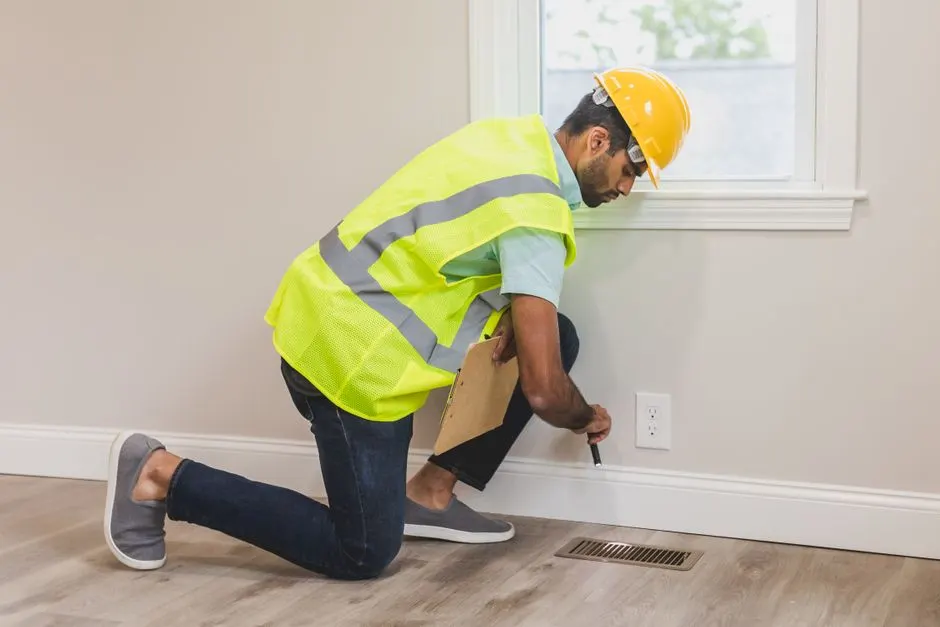
Your slab is leaking because the copper or PEX water line running beneath your concrete foundation has failed - usually from corrosion, soil movement, or abrasion against the slab itself - and the water is now escaping into the soil under your home. The fix is not to tear up the floor first; it is to pinpoint the exact location with acoustic and thermal equipment, then repair or reroute the line with the smallest possible cut into your slab.
We handle slab leaks across Brea every week, from 1960s tracts near Downtown Brea to newer builds off Lambert Road. Here is what is actually happening under your floor, the signs you should not ignore, what it costs to fix in 2026, and the exact steps to take next.
Why is my slab leaking Brea CA?
A slab leak in Brea California is a pressurized water line failure beneath your concrete foundation that pushes water into the soil under your home instead of into your fixtures. It is almost always one of five causes, and the cause determines whether we repair the pipe in place or reroute it.
- Corrosion from aggressive water chemistry. Brea's water runs on the harder side, and copper lines installed before the 1990s are now 30 to 60 years old. Pinhole leaks form from the inside out.
- Soil movement and expansion. Brea sits on expansive clay and decomposed granite. When that soil swells and shrinks with the seasons, it flexes the slab and grinds the pipe against the concrete.
- Abrasion at the slab penetration. Every pipe that passes through concrete rubs against it. Over decades, that contact wears a hole through the wall of the pipe.
- Poor original installation. Lines laid without proper bedding, sleeving, or pressure testing fail early - we see this in some mid-century Brea tracts.
- High water pressure. Anything above 80 PSI stresses every joint in the system. Many Brea homes run 90 to 110 PSI straight off the meter with no regulator.
If you want the full picture of how we confirm which of these is happening at your address, our Slab Leak Detection Brea CA page walks through the equipment and the process step by step.
Signs of a slab leak Brea CA homeowners miss
The signs of a slab leak Brea CA homeowners miss most often are the quiet ones - a warm spot on the floor, a water bill that jumps $40 to $120 with no change in habits, or the faint sound of running water when every fixture is off. By the time you see standing water or cracked tile, the leak has usually been running for weeks.
Watch for these:
- Warm spots on the floor. Hot water line leaks heat the slab from underneath. Barefoot in the kitchen is the best detector you own.
- Unexplained water bill spike. A pinhole leak can waste 10,000 to 30,000 gallons a month. Compare this month's bill to the same month last year.
- The sound of running water with everything off. Put your ear to the floor near the water heater or main line entry. Steady hiss means pressure is escaping.
- Damp carpet or buckling flooring. Laminate and engineered wood cup and lift when moisture wicks up from below.
- Cracks in tile or drywall. Soil saturation softens the ground under the slab and lets it shift.
- Mildew smell with no visible source. That musty odor is moisture trapped under flooring or inside a wall cavity.
- The meter spins with everything shut off. Shut every fixture, then watch the low-flow dial on your meter for two minutes. Movement equals a leak.
Any two of these together justify a professional look. One alone is worth a five-minute meter test.
How Brea soil and housing stock cause slab leaks
Brea's building stock splits into two eras, and each fails differently. Homes built between 1955 and 1975 - the tracts around Downtown Brea and along the older streets off Imperial Highway - were plumbed in copper that is now well past its design life. Homes built from the 1990s onward use PEX or newer copper, and their leaks tend to come from slab movement and pressure rather than pipe age.
The soil underneath both is the common thread. Brea's clay-heavy ground expands when it soaks and contracts when it dries. After a wet winter, the ground swells; through a dry summer and fall, it shrinks and drops. That cycle flexes the slab, and the pipe embedded in it takes the stress.
Two local patterns make it worse. First, Brea gets most of its rain between December and March, so the soil swings hard between saturated and bone-dry. Second, many homes here have irrigation running against the foundation through summer, which keeps one side of the slab wet and the other dry - a recipe for differential movement.
If your leak turns out to be in the main line coming in from the street rather than under the house, that is a different repair. We cover it in detail under Water Line Leak Repair Brea CA.
What should I do if I have a slab leak in Brea California?
What to do about a slab leak Brea California comes down to four steps, in this order: shut off the water, confirm it is a supply-line leak, call for detection, and get the repair done before the soil under your slab turns to mud.
- Shut off the main valve. It is usually at the front of the house near the meter or against the foundation. This stops the water from doing more damage while you sort out the next move.
- Confirm it is a supply leak, not a drain leak. Fill every sink and tub, then let them drain while you watch the slab. If water appears only during draining, it is a drain line issue, not a pressure line.
- Call for detection before anyone cuts concrete. Guessing at the location means cutting three times as much slab as necessary. Acoustic and thermal tools find the leak to within a few inches.
- Get the repair done and the line pressure-tested. A repair that is not tested is a repair you will be redoing.
Do not run the water, do not run the dishwasher or washing machine, and do not ignore it hoping it is condensation. Slab leaks do not seal themselves, and the longer water runs under the slab, the more likely you are looking at foundation work on top of plumbing work.
How we find a slab leak under your floor
We locate slab leaks without breaking concrete first. Our technicians use a combination of acoustic listening equipment, thermal imaging, and electronic amplification to hear and see where the water is escaping.
Acoustic detection works because pressurized water escaping a pinhole makes a distinct high-frequency sound that travels through the slab. We place contact microphones on the floor and triangulate the loudest point. Thermal imaging picks up the temperature difference a hot water leak leaves in the concrete - a warm line under a cool floor shows up clearly on the camera. Electronic amplification confirms the location on low-flow leaks that are too quiet for the ear alone.
Once we have the spot, we mark it, show you the reading, and give you the repair options before we cut anything. Most detections take 45 to 90 minutes on a typical Brea home.
For leaks that are not under the slab - behind a wall, under a bathroom vanity, or in the ceiling - we use the same approach. That work is covered under our Hidden Leak Detection Brea CA service.
Slab leak repair cost Brea CA in 2026
Slab leak repair cost Brea CA in 2026 runs $1,200 to $4,500 for most residential jobs, with the spread driven by whether we can access the pipe from above or have to tunnel underneath.
- Detection only: $350 to $650.
- Spot repair with a small slab cut and patch: $1,200 to $2,200.
- Reroute through the attic or walls (no slab cut): $2,000 to $4,000. This is often the better long-term answer for older copper.
- Tunneling under the slab from outside: $3,500 to $7,000, used when rerouting is not practical.
- Foundation repair, if the leak has already damaged the slab: $5,000 and up, quoted separately by a foundation contractor.
We give you a flat price before we start. No hourly surprises, no change orders mid-job. If the leak can be fixed with a reroute instead of a slab cut, we will tell you - it is usually cheaper, faster, and it removes the failed pipe from the equation entirely.
Common mistakes to avoid with a slab leak
The most expensive mistake homeowners make is letting a plumber start jackhammering before anyone has located the leak. We have walked into jobs where three separate holes were cut into a slab and the leak was still running.
Other mistakes we see:
- Ignoring a small bill spike. A $60 monthly increase is a $720 annual leak. It is also a warning that the pipe is failing.
- Assuming it is a drain when it is a supply line. The repair is completely different, and the wrong diagnosis wastes days.
- Repairing the same pipe twice. If one section of 50-year-old copper has failed, the next pinhole is usually 10 feet away. Rerouting the whole run is often cheaper than three spot repairs.
- Skipping the pressure test after repair. We test every line before we close the floor.
- Not checking water pressure. If your home runs above 80 PSI, a new leak is coming. A $150 regulator prevents a $3,000 repair.
When to call a professional
Call a professional the moment you have two or more slab leak signs at once, or any single sign that has lasted more than a few days. A warm floor, a spiking bill, and the sound of running water together are not a wait-and-see situation.
At Brea Leak Detection Pros, we find the leak, fix it, and test the line before we leave. We work on residential and commercial properties across Brea, and we handle everything from a single pinhole to a full reroute. If you are not sure whether you have a leak at all, call us and we will tell you straight - no charge for the phone conversation, and no pressure if the answer is that your plumbing is fine.
Frequently Asked Questions
Why is my slab leaking in Brea CA?
Most slab leaks in Brea come from corrosion in 30- to 60-year-old copper lines, soil movement from expansive clay, or abrasion where the pipe passes through the concrete. High water pressure above 80 PSI speeds all three up. The fix depends on which cause applies to your home.
What should I do if I have a slab leak in Brea California?
Shut off the main water valve first, then call for detection before anyone cuts concrete. Do not run water, appliances, or irrigation. Detection takes 45 to 90 minutes, and the repair can usually be scheduled the same week. Waiting lets water soften the soil under your slab.
How much does slab leak repair cost in Brea CA?
In 2026, most Brea slab leak repairs run $1,200 to $4,500. Detection alone is $350 to $650. A reroute through the attic or walls costs $2,000 to $4,000 and often beats cutting the slab. Tunneling runs $3,500 to $7,000.
Can I just leave a slab leak alone?
No. A slab leak does not seal itself, and a pinhole can waste 10,000 to 30,000 gallons a month. Left long enough, the water erodes the soil under your foundation and turns a $1,500 plumbing repair into $5,000 or more in foundation work.
How do you find a slab leak without breaking the floor?
We use acoustic microphones to hear the escaping water through the concrete, thermal imaging to see the temperature difference a hot line leaves behind, and electronic amplification for low-flow leaks. Together they pinpoint the leak to within a few inches before any cutting starts.
Get help with Leak Detection in Brea
If your floor is warm, your bill is climbing, or you can hear water running with everything off, we can find and fix it. Call Brea Leak Detection Pros at (657) 681-3703 and we will schedule detection at your Brea home this week.